Why Does My Vacuum Smell? Remove Odors at the Source
Find why your vacuum smells musty, dusty, or like pets, then clean the right parts without masking odors or damaging the machine.
As an Amazon Associate we earn from qualifying purchases. Our recommendations are based on editorial research; we identify hands-on testing when performed. Read our methodology.
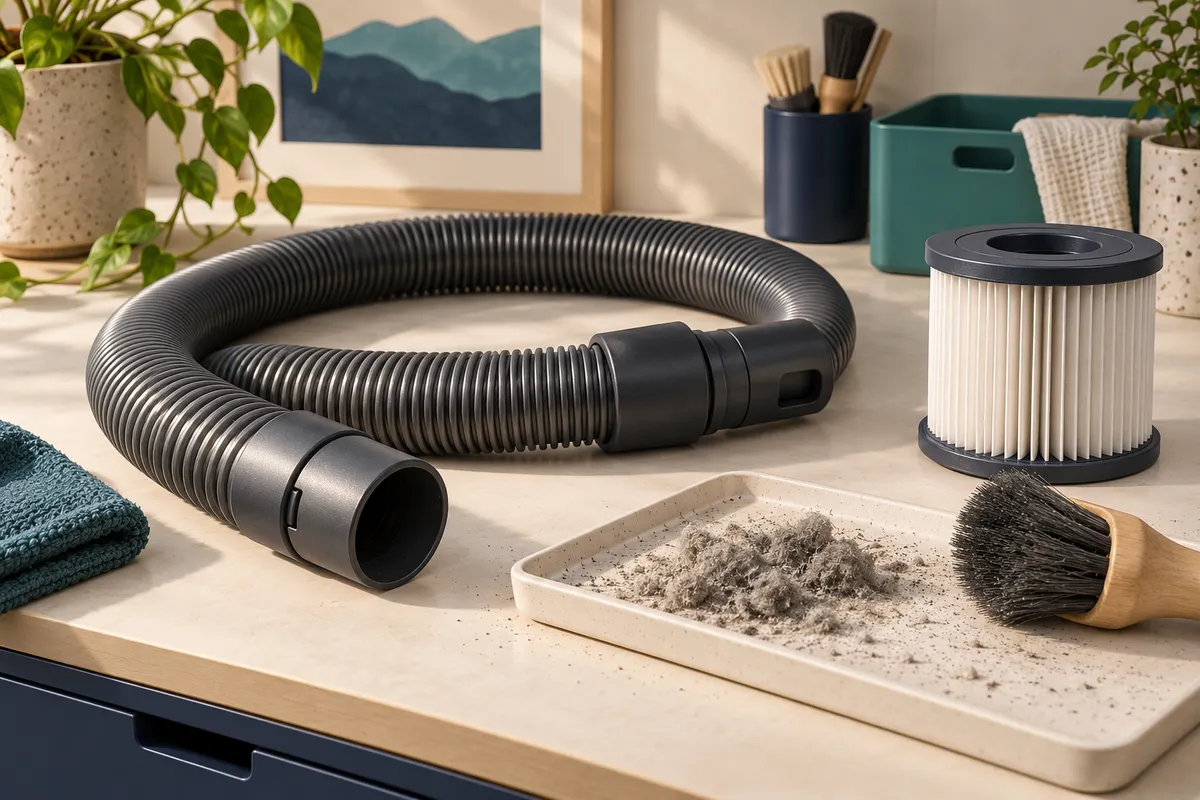
Table of Contents
A vacuum usually smells because collected debris, a dirty bag or dust cup, a filter, or residue in the air path is releasing odor. Empty or replace the collection container first, then inspect the maker-approved cleanable parts. A burning or electrical smell belongs to a different problem: switch the machine off and use our burning-smell checklist.
Odor control works best when you identify the material causing the smell. Adding fragrance may hide it briefly while leaving damp dirt in the machine. This guide is for ordinary dust, pet, and musty odors, not smoke, hot wiring, or a damaged battery.
Find the likely source before buying anything
| When the odor appears | What to inspect | What not to assume |
|---|---|---|
| After collecting pet hair | Bag or cup, head, and accessible hose | The motor is not automatically the source |
| After collecting damp crumbs | Moisture and trapped residue | A dry vacuum cannot be treated as a wet/dry machine |
| Only when the vacuum runs | Collection and exhaust path | Fragrance is not a repair |
| While the vacuum sits in storage | Bag, cup, and washable parts that may remain damp | A closed cupboard will not dry an assembled filter |
| Alongside heat or a rubber smell | Brush and electrical warning signs | Do not continue odor-cleaning trials |
Start with the easiest reversible action. Emptying a cup or fitting a correct new bag costs less effort than taking the entire machine apart, and may identify the problem immediately.
Clean the dust cup or replace the bag
Switch off and unplug before removing the chamber. Empty a dust cup into a waste bag and inspect the lid, seals, and inlet for stuck hair or crumbs. Wipe permitted surfaces using the manual’s method. A removable cup is not automatically dishwasher-safe, and a cup with attached electrical parts should not be immersed.
If the cup is approved for washing, use the maker’s specified cleaner and let it dry completely before refitting. Keep the cyclone assembly or other attached mechanisms dry unless washing them is explicitly authorized. A clear plastic chamber can show dirt easily; it cannot tell you which parts tolerate detergent.
For a bagged vacuum, replace the disposable bag rather than trying to deodorize its contents. Check the bag compartment for dirt that escaped around an incorrectly seated collar. Wipe only the accessible surfaces permitted in the manual. A leak into the machine body may require additional inspection.
Check filter care carefully
The filter can retain odor-producing residue, but not all filters can be washed. Identify the exact filter type and part number. If replacement is required, use the compatible specification rather than a generic pad cut to size. The fit matters as well as the material.
Do not spray perfume or essential oil onto filter media. That changes what passes through the air path without removing the source. For a washable filter, follow the instructions for water and drying; for a non-washable filter, follow replacement guidance. Our filter guide explains the distinction without assuming one routine fits every vacuum.
If odor returns right after refitting a washed filter, stop and confirm it is dry. Dampness inside a sealed machine is a reason to investigate, not to run the motor longer in hopes of drying it.
Inspect the head and hose
Hair wrapped around the brush, crumbs behind the floorhead inlet, and residue in a hose can remain after the dust cup is emptied. Clear accessible dirt with power disconnected. Use the release mechanism in the manual; forcing a connector can create an air leak.
For a hose, begin with dry debris removal. Wash only a plain removable hose that the manufacturer approves for washing. Powered hoses must remain dry. See how to clean a vacuum hose for the decision sequence.
Also inspect the tool you used for the mess. An upholstery brush can carry pet hair between rooms. Cleaning that tool may be more useful than replacing a filter elsewhere in the machine. Keep brushes and soft roller tools away from heat when drying, and follow the maker’s instructions for their specific materials.
Avoid common deodorizing shortcuts
Vacuuming baking soda, carpet powder, or fragrance pellets is not universally safe. Fine powders may load a filter quickly, and the machine’s warranty may exclude unsuitable collected material. Use only products explicitly permitted by the manufacturer for that model.
Bleach, vinegar, essential oils, and strongly scented cleaners are not interchangeable with an approved cleaning method. Mixing cleaning chemicals creates further risks without improving diagnosis. Do not pour liquid into the dust inlet or attempt to sanitize the motor chamber.
If you cannot access the source without opening a sealed housing, ask support. A persistent smell after permitted cleaning can justify replacing a contaminated hose or filter, but the part should match the model and the underlying cause should be addressed.
Prevent pet and litter odors
Empty collected pet hair after a heavy cleaning session rather than storing it for weeks. Around a litter box, remove wet clumps and soiled material separately. An ordinary dry vacuum is for the dry debris its manual allows, not for animal waste or wet litter.
A washable mat or a simple sweep of larger granules can reduce what enters the vacuum. Our cat-litter vacuum guide focuses on pickup format and disposal, rather than claiming one machine can safely collect every kind of litter.
Allow approved washable parts to dry outside the assembled vacuum in a ventilated area. Store the machine clean and dry, with accessories free of trapped damp fabric or crumbs. Check your maintenance routine when odors become recurring rather than occasional.
Common questions
Why does my vacuum smell like dog even after emptying it?
Inspect the head, tool, filter, and accessible hose. Emptying the cup removes only the collected contents; hair and residue can remain elsewhere. Clean or replace those parts according to the manual.
Can a HEPA filter remove the smell?
Particle filtration and odor reduction are different functions. Do not assume a HEPA label means the filter removes gases or fragrance. Use any odor-control feature only as the manufacturer describes it.
Is the smell a reason to replace the vacuum?
Not necessarily. A new compatible bag or filter and correct cleaning may resolve it. If the smell is burning, persistent after maintenance, or associated with heat or damage, stop using the machine and seek service advice.
Is it safe to wash every removable part?
No. Removability allows access; it does not prove washability. Look up the exact model through the manufacturer’s support page, such as BISSELL product support, before applying water.
Keep reading
Why Does My Vacuum Smell Burnt? What to Check Before Restarting
A burning vacuum smell can come from a stalled brush, damaged belt, blocked airflow, or an electrical fault. Use this safe diagnostic checklist.
How to Clean a Vacuum Hose: Clear Clogs Without Damaging It
Learn how to check, unclog, and clean a vacuum hose safely, including which hoses must stay dry and when replacement makes more sense.
How to Clean a Vacuum HEPA Filter—and When to Replace It
Find out whether your vacuum filter is washable, how to clean approved filters, and when a HEPA filter should be replaced instead.
Best Vacuum for Cat Litter: Dry Cleanup Without Spreading the Mess
Choose a practical vacuum for dry loose cat litter, compare handheld and canister options, and learn what to remove separately.
Ready to Find Your Perfect Vacuum?
Compare vacuum features, tradeoffs, and documented product information
Browse All Vacuums