Best Vacuum for Vinyl Plank Floors: Choose the Right Head First
Find a vacuum setup for vinyl plank flooring, compare suction-only and lightweight options, and avoid brush choices that conflict with floor care instructions.
As an Amazon Associate we earn from qualifying purchases. Our recommendations are based on editorial research; we identify hands-on testing when performed. Read our methodology.
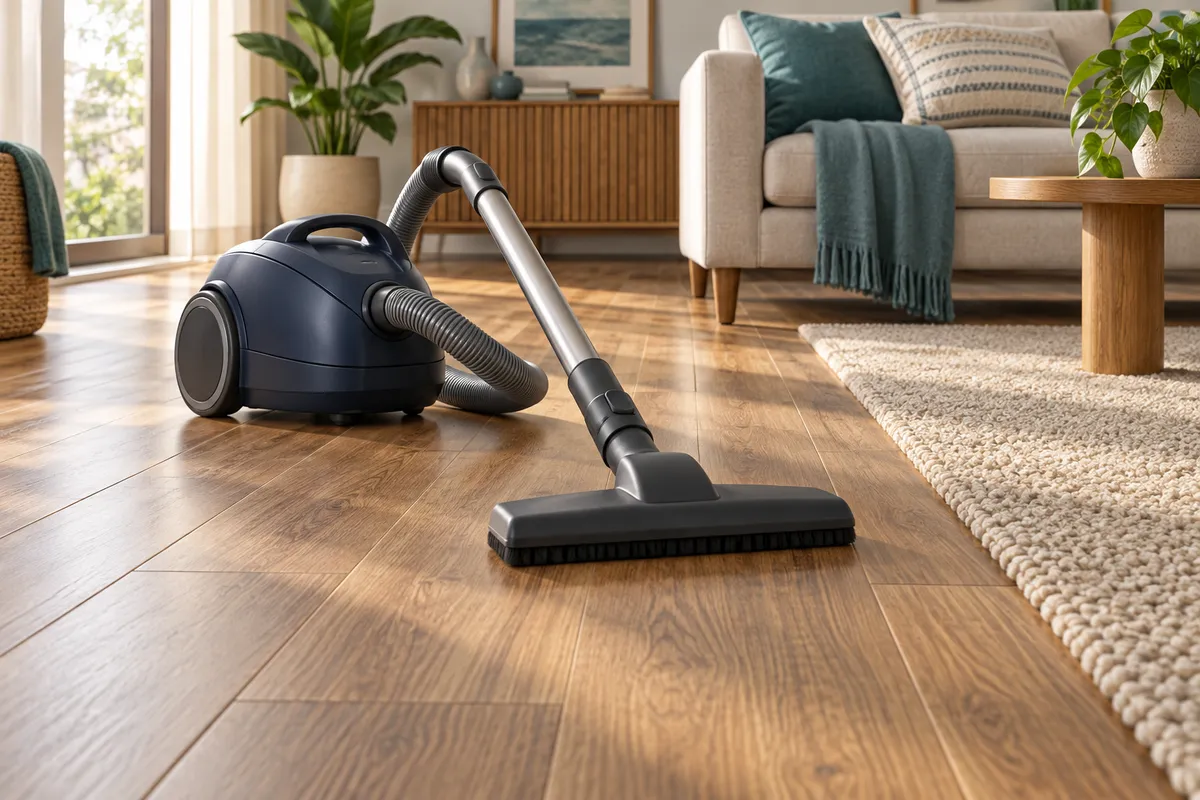
Table of Contents
- Read the flooring instructions before the vacuum listing
- A practical shortlist
- Miele Classic C1 Pure Suction: a hard-floor-oriented canister
- BISSELL Featherweight: a straightforward cleanup helper
- Brush-off mode and soft rollers: read the details
- Match the vacuum to the debris
- Ownership costs and daily handling
- Frequently asked questions
The best vacuum setup for vinyl plank floors starts with a floorhead your flooring manufacturer permits. If the floor instructions prohibit a rotating beater bar, choose a suction-only tool or a model with a genuine brush-off mode. “Hard-floor” marketing, a soft roller, or a high price does not by itself establish compatibility with your installed floor.
Our shortlist focuses on useful formats and buying checks rather than claiming laboratory scratch testing. These recommendations use published product information. We have not measured pickup or long-term wear on your floor, and the exact bundle remains important.
Read the flooring instructions before the vacuum listing
Look up the care sheet for the manufacturer and product line of your LVP or LVT. Note permitted tools, prohibited brush designs, and any wet-cleaning restrictions. For example, Shaw’s vinyl care information is the appropriate source for covered Shaw flooring. Other floors may have different requirements.
A suction-only head can still carry grit on its wheels or underside. Inspect the head and clear trapped particles before moving it across a finished floor. The safest buying process combines an approved design with clean equipment and sensible use.
A practical shortlist
| Candidate | Why consider it | Limitation to understand |
|---|---|---|
| Miele Classic C1 Pure Suction | Canister format with a straight-suction combination tool | Not a powered deep-carpet setup; confirm current supplied head |
| BISSELL Featherweight 2033 | Simple corded stick/handheld format for light dry cleanup | A smaller helper rather than a full-featured canister |
| Your existing vacuum with an approved hard-floor attachment | May solve the problem without replacing the machine | Compatibility must be confirmed; a generic fit is not enough |
For a mainly hard-floor home, the canister format deserves consideration. For small quick cleanups, a simple light machine may be enough. If your existing body works well, price the correct attachment before buying another vacuum.
Miele Classic C1 Pure Suction: a hard-floor-oriented canister

A bagged canister with a straight-suction combination floorhead. Check your floor's care requirements and the exact head supplied by the seller.
Miele’s current US product page lists the supplied equipment. Packages can change, so match the seller’s contents instead of assuming an older review’s tool identifier still applies.
The canister separates the motor body from the tool you guide across the floor. That can make the handle feel easier to move, though you still manage the body, hose, and cord. A combination suction tool is useful for the right hard floors and suitable low-pile surfaces; it is not an electric brush for deep carpet.
Check the underside and wheels, suction control, storage footprint, bag supply, and compatible filter costs. If stairs connect your rooms, consider whether carrying the canister between levels is realistic. A floor-friendly head does not make every part of the cleaning route convenient.
BISSELL Featherweight: a straightforward cleanup helper
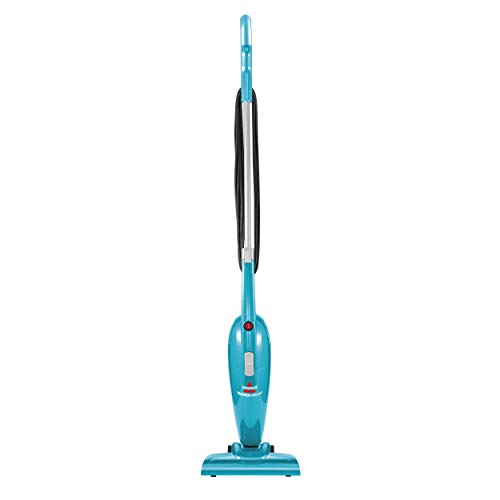
A corded convertible helper for light dry floor debris. Confirm the nozzle suits your installed vinyl flooring and plan the cord route.
BISSELL describes the 2033’s convertible format. This option makes sense when the job is small and a simple machine will be used more often than a large one.
Its compromises include cord management, a compact collection system, and fewer tools or controls than a larger canister. Do not buy it expecting equivalent carpet agitation or a measured filtration result we have not verified. Think of it as a practical light-debris option, not a universal whole-house winner.
Brush-off mode and soft rollers: read the details
If considering an upright or cordless stick, confirm that the brush actually stops when the hard-floor setting is selected. Lower suction and raised carpet height are not the same thing. Some machines offer a powered soft roller rather than brush-off operation; that still needs approval under your floor’s instructions.
For mixed carpet and vinyl, a model with interchangeable approved tools may be more sensible than forcing one head to do everything. Store tools where you will actually change them. A setup that needs an inconvenient search for accessories encourages shortcuts.
See our beater-bar explanation if the terms in product listings are unclear. Brush design, agitation, and suction are separate features. Comparing the complete cleaning setup avoids choosing by a single motor-power number.
Match the vacuum to the debris
Fine dust requires appropriate filtration and a well-sealed collection path. Larger dry crumbs need enough inlet clearance to avoid pushing material ahead of the head. Pet hair requires a tool that collects it without creating an unmanageable maintenance burden.
Do not assume a dry vacuum can collect puddles or sticky messes. If you want a wet floor washer, check both the appliance’s design and your flooring’s approved cleaning method. Steam, soaking, and strong chemicals should not be introduced merely because another floor tolerates them.
For dry litter around a tray, collect only suitable loose debris and use the cat-litter cleanup guide. Trapped abrasive particles deserve attention before the next floor-cleaning pass.
Ownership costs and daily handling
Compare replacement bags, filters, approved attachments, and service availability alongside the purchase price. A cordless setup adds battery condition and charging to the calculation. A bagless machine adds regular bin and filter care. Neither approach is automatically cheaper over the period you plan to own it.
If weight or bending is a concern, evaluate carrying, pushing, emptying, and tool changes separately. Our seniors guide compares formats; the limited-mobility checklist focuses on the tasks that make a machine usable.
Frequently asked questions
Can a vacuum scratch vinyl plank floors?
An unsuitable head or trapped grit can create a risk of marking. Follow the flooring maker’s instructions and keep the tool clean. No generic product recommendation can guarantee your floor will never scratch.
Is a soft roller always allowed?
No. It is still a rotating cleaning tool. Check your floor instructions and the vacuum’s exact head rather than assuming “soft” overrides restrictions.
Do I need a new vacuum for LVP?
Possibly not. A manufacturer-approved compatible suction-only attachment may be enough if the existing body is suitable and working well. Verify compatibility and the floor’s requirements first.
Keep reading
What Is a Vacuum Beater Bar? Brush Rolls, Floors, and Safe Use
Understand what a vacuum beater bar does, how it differs from suction-only tools, and when to turn the brush off to protect your floors.
Best Vacuum for Cat Litter: Dry Cleanup Without Spreading the Mess
Choose a practical vacuum for dry loose cat litter, compare handheld and canister options, and learn what to remove separately.
Best Vacuum for Seniors: Compare Weight, Controls, and Cleaning Tasks
A research-based vacuum shortlist for seniors, comparing simple sticks, handheld helpers, and canisters by carrying, controls, and maintenance.
Vacuum Maintenance Guide: A Practical Checklist by Symptom
A model-aware vacuum maintenance checklist for bags, filters, hoses, brush rolls, odors, and lost suction, with links to detailed fixes.
Ready to Find Your Perfect Vacuum?
Compare vacuum features, tradeoffs, and documented product information
Browse All Vacuums